
The Decision Problem
Enterprise organizations increasingly build digital experiences across complex platforms—Salesforce, Microsoft, custom SaaS, and emerging AI tools. While teams invest heavily in CX and UX, experience decisions are often made after platform, architecture, or vendor choices are already locked.
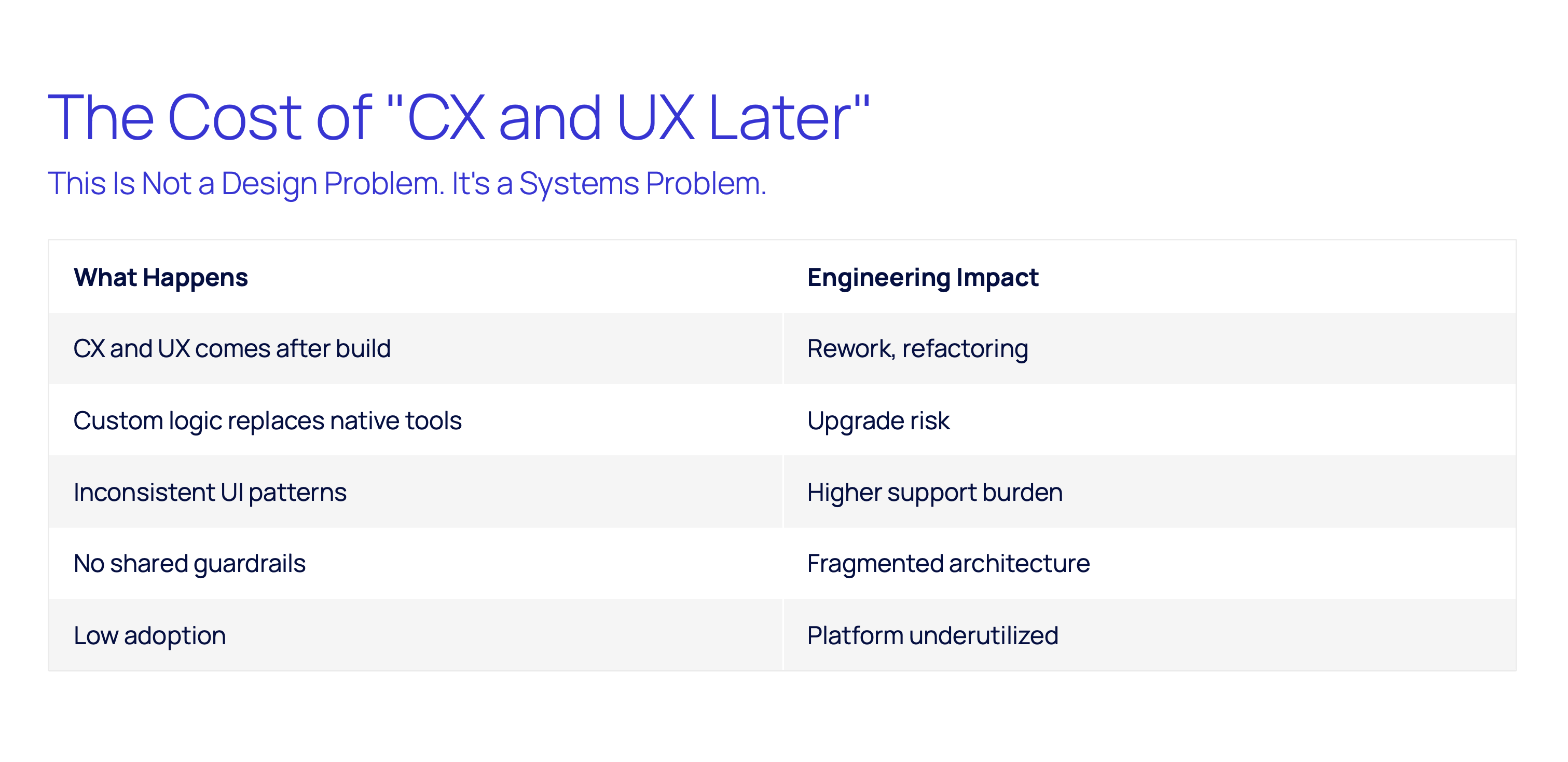
- Fragmented experiences across channels
- Customizations that fight the platform
- Escalating delivery cost and long-term maintenance risk
Leadership wasn’t asking how to design better screens.
They were asking:
How do we make better experience decisions earlier—before platform constraints turn into expensive compromises?
The Risk
Without a shared decision framework:
- CX teams optimize journeys that platforms can’t support
- Engineering teams optimize for feasibility without user context
- Product decisions harden around features instead of outcomes
The real risk wasn’t poor UX.
It was locking in the wrong direction too early.
The Insight
Through repeated discovery and pre-sales work, a pattern emerged:
Experience strategy only scales when it is explicitly aligned to platform realities—not layered on top of them.
Traditional CX and UX methods were necessary, but insufficient. What was missing was a way to connect:
- Human needs
- Business goals
- Platform constraints
- And emerging AI capabilities
Before roadmaps, not after.
The Strategy: PAX (Platform-Aligned Experience)
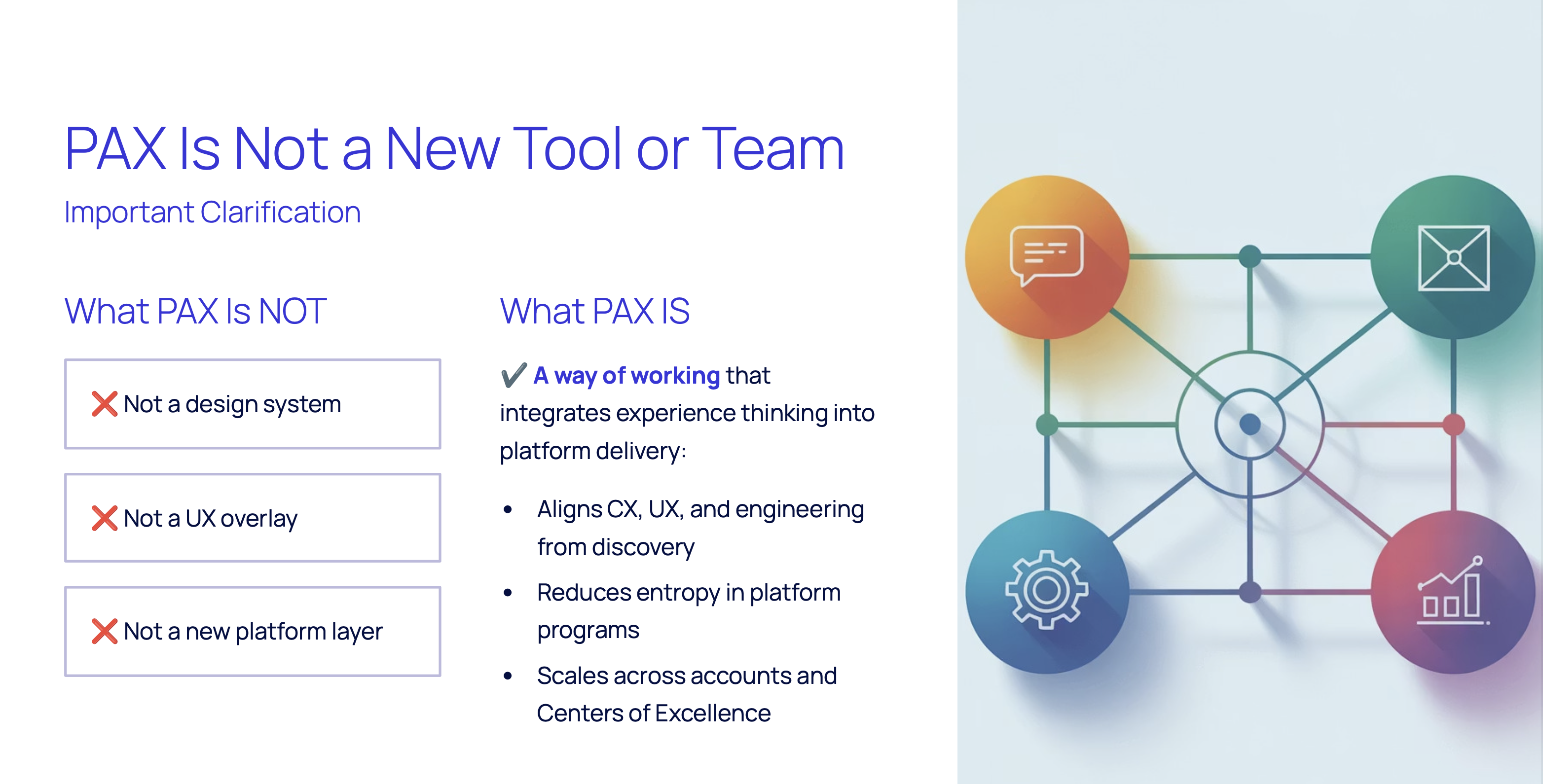
PAX is a strategy framework I developed to move experience thinking upstream, where decisions have leverage.
Rather than starting with journeys or interfaces, PAX reframes the work around decision alignment:
- What outcomes matter most?
- What can the platform do natively?
- Where does customization add value vs. long-term risk?
- How should experience adapt across channels, roles, and moments?
PAX treats CX and UX not as deliverables, but as inputs into product and platform decisions.
How PAX Works (at a high level)
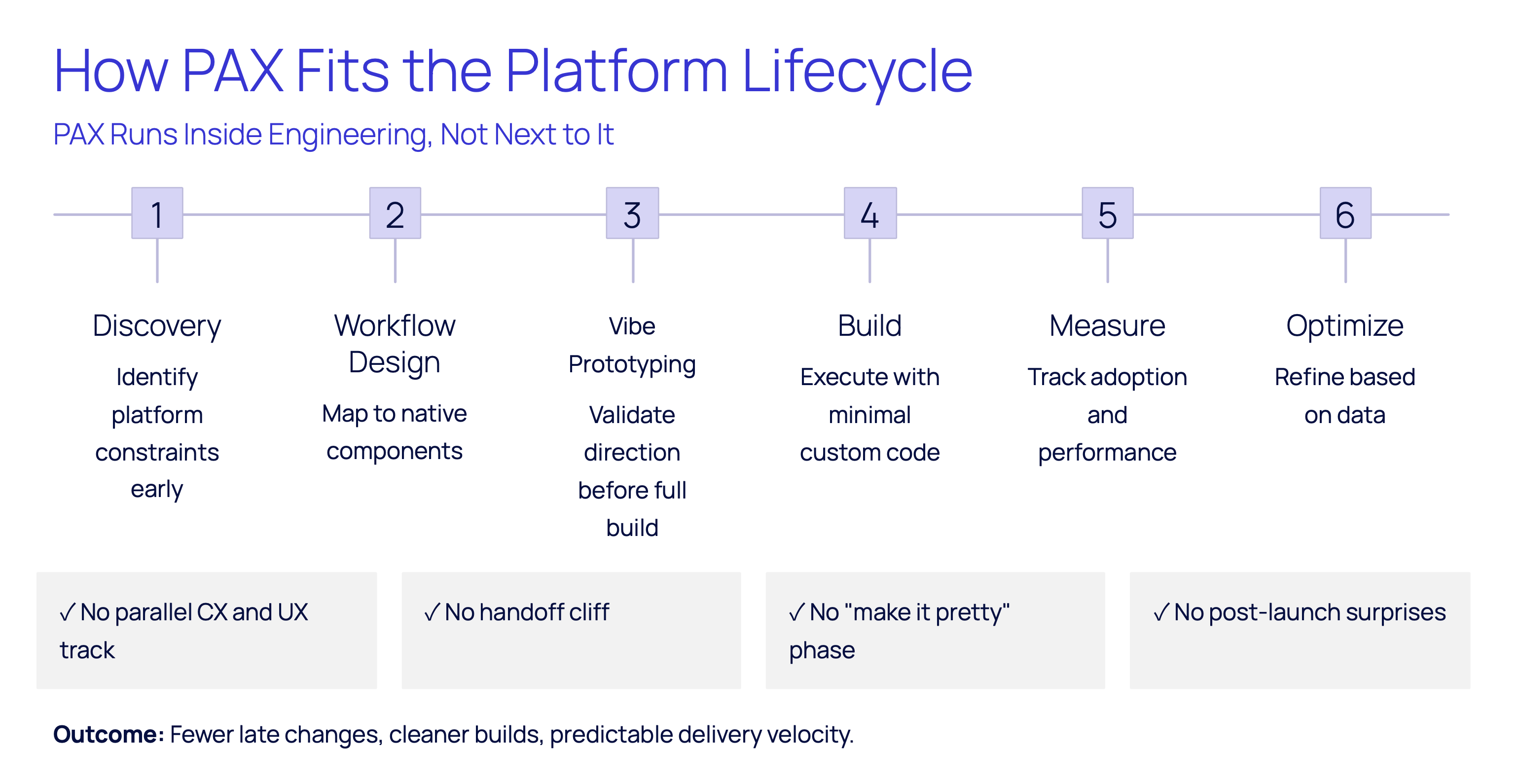
PAX is applied through structured, collaborative strategy work, typically involving product, platform, design, engineering, and executive stakeholders.
Key components include:
- Outcome Alignment
Establishing a shared North Star and success metrics before solutioning begins. - Platform Reality Mapping
Making platform constraints, capabilities, and tradeoffs visible early. - Experience Decision Framing
Using CX and UX insights to guide where to invest, where to adapt, and where not to build. - Scalable Experience Patterns
Defining experience approaches that can evolve with the platform rather than fight it.
This shifts conversations from “What should we design?”
to “What should we decide?”
The Role I Played
I led PAX as a strategy facilitator and decision partner, not a delivery owner.
My role focused on:
- Framing the decision problem
- Facilitating executive and cross-functional workshops
- Translating CX/UX insights into platform-aware tradeoffs
- Helping teams align on direction before committing to build
This work often happened during early discovery, pre-sales, or ambiguous “what are we really trying to do?” moments.
The Outcome
Applying PAX consistently led to:
- Clearer product and platform direction earlier in the lifecycle
- Reduced rework caused by late-stage experience conflicts
- Better alignment between CX, product, and engineering teams
- More sustainable experience decisions that respected platform evolution
Most importantly, it gave leadership a shared language for making experience decisions that balanced ambition with reality.
Why This Matters
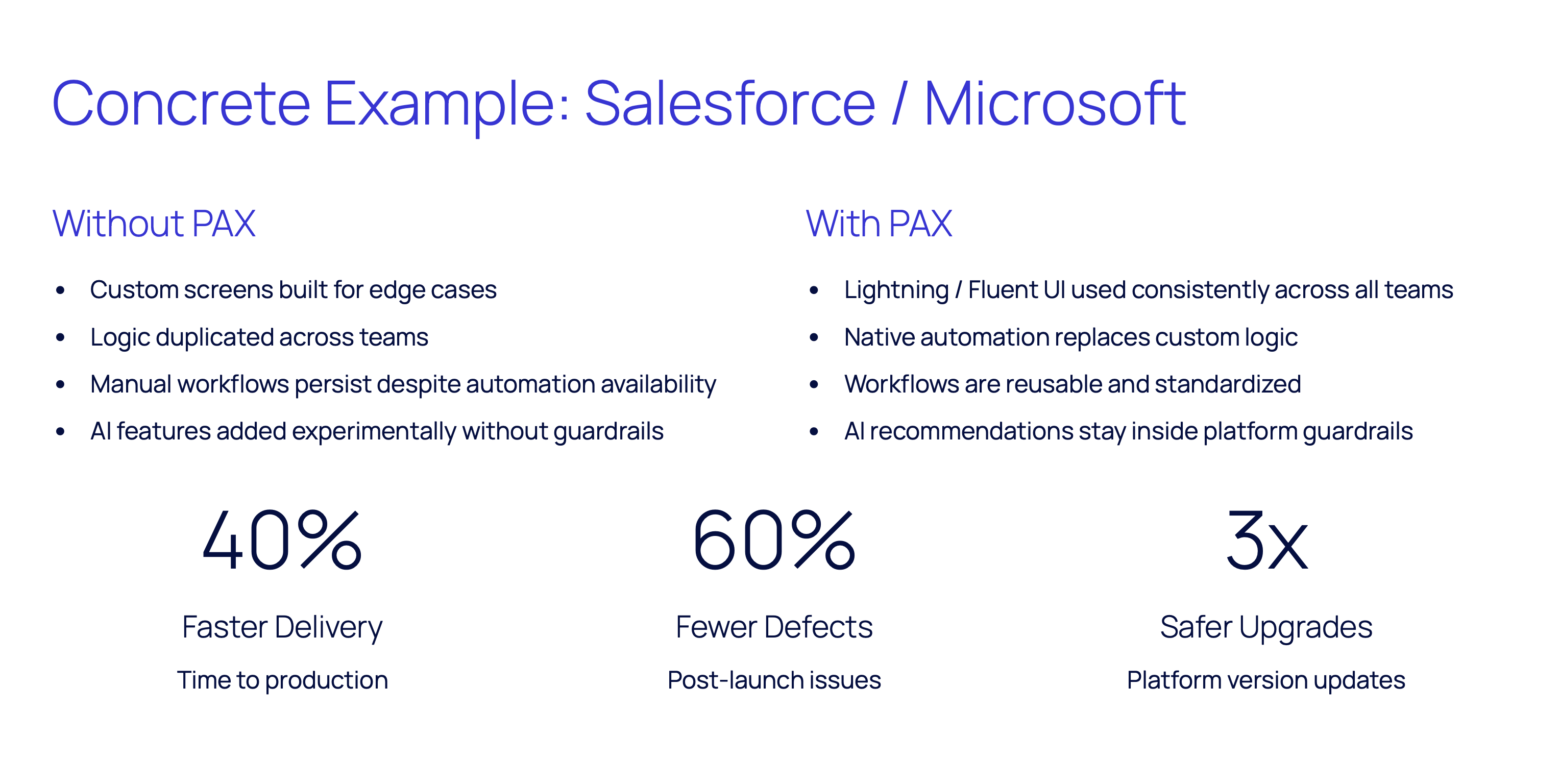
PAX represents how I approach product strategy more broadly:
- CX and UX are foundational, but not the end goal
- Platforms are constraints and accelerators
- Strategy lives in decisions made early—when change is still cheap

PAX is not a methodology I “apply.”
It’s a way of thinking that ensures experience drives better product and platform outcomes.